
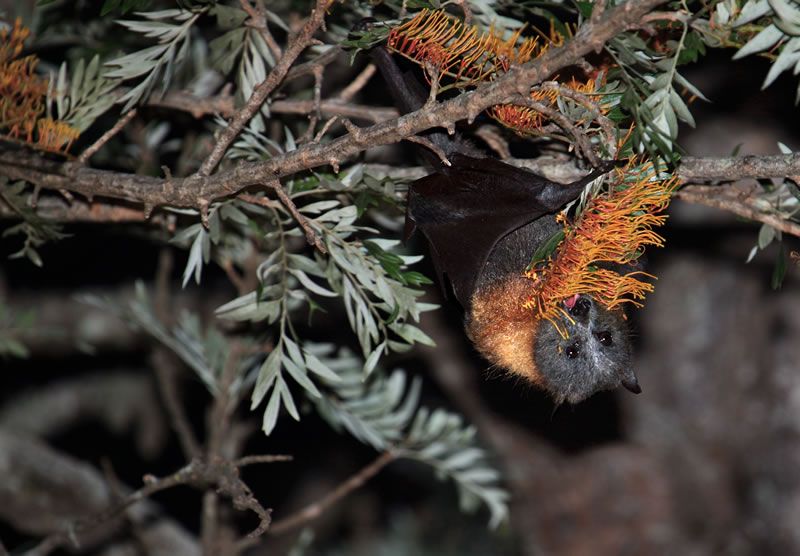
In the Sydney region the most numerous and best-known flying-fox is the grey-headed flying-fox. The black flying-fox occurs in small numbers, and the little red flying-fox visits some camps.
Conservation status
The grey-headed flying-fox is listed as threatened in the Vulnerable category in New South Wales, and under the national Environment Protection and Biodiversity Conservation Act. It was listed as Vulnerable by the NSW Scientific Committee in 2001.
What makes them matter
- The largest of Australia's bats
- Important pollinators and seed dispersers
- Large numbers are essential for forest pollination and seed dispersal
- Females have one pup each year
- Also called fruit bats
Grey-headed flying-foxes feed on the flowers or fruits of more than 100 native plants, mostly trees, carrying pollen and seed over distances no other pollinator covers. Read more about feeding and drinking →
Vulnerable to extreme heat
Flying-foxes are vulnerable to periods of extreme heat: they pant, fan themselves and seek shade, and mass fatalities have been reported at temperatures of 43°C and above. On 18 January 2013, heat stress killed 358 grey-headed flying-foxes in Ku-ring-gai Flying-fox Reserve, mostly juveniles.
How the Gordon camp responds to heat →